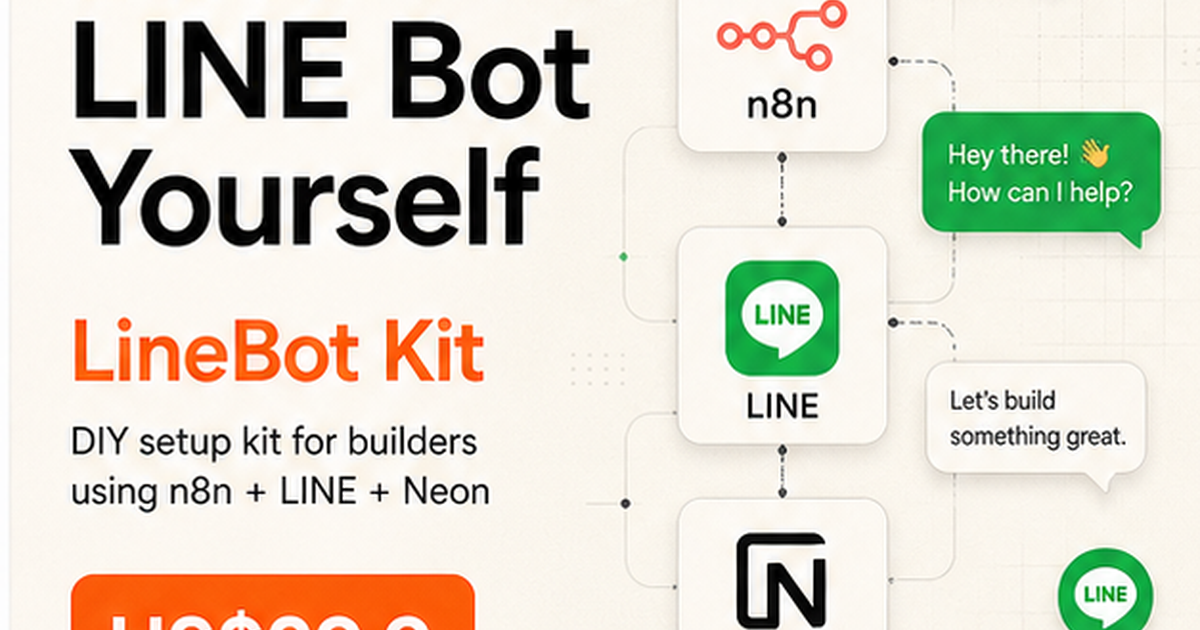
 Build a professional LINE official account with zero code — import one-click templates and let AI boost your marketing!
Emotion Concepts: The Tipping Point for AI Evolving from “Tool” to “Partner”?
Yes, this is precisely the watershed moment. When AI can internalize that “disappointment” is not just a negative emotion but stems from the gap between “expectation” and “reality,” and can link it to subsequent possibilities like “bouncing back” or “giving up,” the nature of its interaction changes. It is no longer a cold tool executing commands but a potential partner capable of perceiving conversational context and anticipating the user’s psychological state. The industrial significance of this leap is immense: the core of product differentiation will shift from “what it can do” to “how it feels.”
Over the past decade, AI progress has primarily been reflected in task completion: more accurate translation, smoother conversation, more astonishing creative content. The underlying competition was about data scale, computing power, and algorithms. However, as the foundational capabilities of top-tier models gradually approach a ceiling, the subtlety of “user experience” becomes the decisive factor. Understanding emotion concepts is precisely the cornerstone for crafting an ultimate experience.
Consider two customer service chatbots: one can only recognize the keyword “angry” and reply with a formulaic apology; the other can discern a complex mix of “anxiety,” “feeling undervalued,” and “skepticism about the solution” from a user’s indirect narrative, and accordingly adjust its tone, prioritize providing a specific timeline, and proactively arrange follow-up. The latter brings not just problem-solving but also emotional reassurance and trust-building. According to a survey of enterprises, after implementing AI with basic emotional response capabilities, customer satisfaction (CSAT) increased by an average of 22%, while dispute escalation rates decreased by 31%. This directly impacts the global customer service software market, valued at over $80 billion annually.
More crucially, this capability is not achieved through explicit “emotion label” rules but emerges naturally as internal representations when models learn human language. This makes AI’s emotional responses more flexible, generalizable, and difficult for competitors to simply replicate. It creates a new kind of technological moat: “Contextual Intelligence.”
| Competitive Dimension | Traditional AI Competition (2020-2025) | Emotion Concept AI Competition (2026-) |
|---|---|---|
| Core Focus | Task Accuracy, Factuality | Interaction Appropriateness, Emotional Resonance |
| Technical Barrier | Parameter Count, Training Data Scale | Quality of Concept Emergence, Multimodal Fusion |
| Product Manifestation | Whether Features Are Powerful | Whether the Experience Is “Considerate” |
| Primary Markets | Efficiency Tools, Content Generation | Companion Applications, High-end Advisory Services |
| Business Model | API Calls, Subscription-based | Outcome-based Revenue Sharing, Deeply Integrated Solutions |
This comparison table clearly indicates the direction of the industry’s turning point. Cloud AI giants like OpenAI and Anthropic already view this as a core R&D direction, while consumer tech giants like Apple are even more likely to use it to redefine the interaction paradigm of personal devices. A future Siri or Google Assistant, built with such deep emotion concept models, could transform from a passive assistant into an active life coordinator, anticipating a user’s “stress” on a busy morning or “loneliness” after a long trip, and providing vastly different information and service recommendations.
mindmap
  root(Emotion Concept AI-Driven Industry Transformation)
    (Consumer Tech Market)
      Personalized Device Interaction<br>(e.g., Context-Aware Smartphone Assistant)
      Emotional Wellness Companion Apps<br>(Estimated Market CAGR of 35%)
      Immersive Entertainment Content<br>(Gaming, Interactive Storytelling)
    (Enterprise Services Market)
      Next-Generation CRM & Customer Service<br>(Key to Improving Customer Retention)
      Intelligent Human Resource Management<br>(Employee Well-being & Retention Analysis)
      High-Level Decision Support Systems<br>(Incorporating Emotional Risk Assessment)
    (Technology Supply Chain)
      Rising Demand for Dedicated NPUs<br>(Edge Emotion Computing)
      Multimodal Sensor Integration<br>(Voiceprint, Micro-expression Imaging)
      Privacy-Enhancing Technologies<br>(Federated Learning, Homomorphic Encryption)
    (Emerging Risks & Regulations)
      Ethical Controversies Over Emotional Manipulation
      Cross-Cultural Emotion Bias Detection
      Formation of National Regulatory Frameworks<br>(e.g., Extension of EU AI Act)
Who Are the Winners? Cloud Giants, Hardware Manufacturers, or Vertical Application Startups?
There is no single winner in this race, but it will reshape the value chain. Cloud vendors with foundational model R&D capabilities (like Microsoft+OpenAI, Google, Amazon) will control the definition of “emotion concepts” and the supply of the most advanced models. However, the true value of this technology manifests in deep integration with specific scenarios, hardware, and data, creating enormous opportunities for other players.
First, look at hardware manufacturers, especially Apple. Apple’s consistent philosophy is “technology serves the experience,” and it possesses the world’s largest, most intimate high-end hardware ecosystem. If emotionally intelligent AI can only run in the cloud, it will be constrained by latency, privacy, and network connectivity issues. Apple’s powerful on-device chips (like the M-series, A-series Bionic chips) and Neural Engine are the perfect platform for achieving real-time, privacy-secure emotion concept computing. Future iPhones or Vision Pros could infer a user’s emotional state in real-time on the device through voice tone, text input rhythm (and even camera analysis with privacy consent), allowing all native apps and services to adapt seamlessly. This deeply integrated experience is difficult for pure cloud services to match. Analysts predict that by 2028, over 60% of high-end consumer electronic devices will have built-in dedicated emotion computing units.
Second, there are vertical application startups deeply entrenched in specific domains. The emotion concepts of general models are foundational, but professional fields like healthcare, education, and law have unique emotional contexts and ethical norms. For example, in psychological counseling assistance scenarios, AI needs to understand the subtle differences between “avoidance behavior in PTSD patients” and “general depressive low mood” and adopt completely different conversational strategies. This requires the combination of domain knowledge (data) and fine-tuning of foundational emotion models. These startups may not develop underlying models but can create the most practical end products, becoming key pieces in the ecosystems of large companies or acquisition targets.
Finally, enterprise software giants like Salesforce, ServiceNow, and SAP will also actively integrate this technology. For them, this is not an independent feature but a catalyst to thoroughly upgrade their existing product matrices. CRM systems will automatically analyze customer hesitation emotions in sales conversations; HR systems can detect early fluctuations in team morale from employee feedback. This will drive a wave of enterprise software replacement.
timeline
    title Emotionally Intelligent AI Technology and Market Evolution Timeline
    section 2024-2025 Germination Period
        Academic Research Validates Emotion Concept Emergence : Top Conference Papers Published
        Laboratory Prototypes Appear : Major Cloud Vendors Internal Testing
    section 2026-2027 Initial Productization
        Cloud APIs Offer Advanced Emotion Parameters : Developers Begin Experimentation
        First Consumer-Facing Applications Launch : Focus on Mental Health & Advanced Assistants
        Enterprise Pilot Projects Initiate : In Customer Service & Talent Management Fields
    section 2028-2030 Integration & Proliferation Period
        Becomes Standard Feature in High-End Devices : Apple, Samsung Flagship Products Equipped
        Vertical Industry Solutions Mature : Healthcare, Education, Law-Specific Models
        Regulatory Frameworks Initially Established : Addressing Emotional Data & AI Ethics
How Will This Wave Impact Existing AI Ethics and Regulatory Frameworks?
The impact is disruptive; existing frameworks are almost entirely unprepared. Current AI ethics discussions mostly revolve around bias, fairness, transparency, and accountability, primarily targeting AI’s “decision outputs.” However, the core capability of emotion concept AI is “emotional input” and “influence process.” This introduces a more thorny, fundamental question: when AI not only understands your emotions but can also predict what information or interaction methods can guide or change your emotions, what is the nature of its influence? Is it “enhanced service” or “implicit manipulation”?
For example, a shopping assistant AI detects a user is in a “impulse buying” joyful mood. Should it顺势 recommend more products to boost platform revenue, or should it, based on “concern” for the user’s long-term financial health, timely remind or cool down? The ethical dilemma here is far more complex than “whether the recommendation algorithm is fair.” It touches on whether AI should, and how it should, assume a role as a kind of “moral agent.”
This will force regulators to think from new angles. The EU’s “AI Act” categorizes systems based on risk levels. Systems capable of deeply influencing human emotions and behavior like this are highly likely to be classified as “unacceptable risk” or “high-risk” categories, facing the strictest scrutiny and restrictions. Regulatory focus may include:
- Mandatory Transparency Disclosure: Systems must clearly inform users that they possess emotion analysis and adaptation capabilities.
- Purpose Limitation & Consent: Processing of emotional data must have a clear, specific purpose and obtain users’ explicit, active consent, and cannot be used for unauthorized emotional influence.
- Right to Deactivate: Users must be able to deactivate the system’s emotion adaptation function at any time, reverting to basic interaction mode.
- Algorithm Auditing: Regular third-party audits are needed to check if models are engaging in inappropriate emotional inducement or exploiting vulnerabilities.
For enterprises, this is not just a compliance cost but a cornerstone of brand trust. Companies that率先 establish responsible guidelines for emotional AI use and make public commitments will gain significant advantages in consumer trust. A global consumer survey shows that 78% of respondents said they would be more inclined to use products from companies with strict self-regulation on emotional data use.
| Potential Ethical Risk | Specific Scenario Example | Possible Mitigation Measures |
|---|---|---|
| Emotional Manipulation & Exploitation | Game AI deliberately induces player frustration to stimulate in-app purchases. | Set influence intensity thresholds; mandatory cool-down period reminders. |
| Privacy Erosion | Long-term tracking of employee psychological states via voice analysis for improper performance evaluation. | Strictly separate work and personal contexts; data anonymization and aggregation. |
| Emotional Dependence & Substitution | Users become overly dependent on AI emotional companions, leading to degradation of real-world social skills. | System actively encourages real-world interaction; set daily usage time suggestions. |
| Cultural Bias Reinforcement | Models based on mainstream cultural data misinterpret or overlook emotional expressions of minority groups. | Incorporate diverse cultural emotional corpora; establish bias detection and correction mechanisms. |
| Blurred Responsibility Attribution | User makes a major erroneous decision based on AI emotional advice, who is responsible for the loss? | Clear terms of use; provide decision review and human intervention channels. |
Implications for Taiwan’s Tech Industry: Opportunities Lie in Integration and Application Layers
Taiwan holds a key position in the global tech hardware supply chain but is not a protagonist in the AI foundational model race. The rise of emotion concept AI, however, points to a clear path for Taiwan’s industry: become experts in integrating top-tier emotional intelligence with hardware and vertical domains.
Opportunity One: Edge Computing Chips and Sensor Integration. Real-time application of emotion concepts requires low-latency, high-efficiency computing. This is precisely Taiwan’s strength in IC design and manufacturing. Developing neural network processor (NPU) IP dedicated to emotion inference or integrating this functionality into next-generation smartphone and laptop SoCs is a huge market. Simultaneously, combining Taiwan’s strong sensor capabilities (like microphone arrays, biometric sensors) to provide richer multimodal emotional input can create complete hardware solutions.
Opportunity Two: Building “Emotionally Intelligent Solutions” for Specific Vertical Domains. Taiwan has deep industry knowledge (Domain Knowledge) in fields like healthcare, manufacturing, and smart cities. Combining open-source or licensed foundational emotion models to develop “doctor-patient communication assistance systems” for local medical institutions or “production line personnel fatigue and stress early warning systems” for manufacturing can create highly practical products difficult for international giants to directly replicate. According to forecasts by the Market Intelligence & Consulting Institute (MIC), Taiwan’s AI application service market is expected to exceed NT$100 billion by 2030, with applications related to human-computer interaction optimization accounting for over one-third.
Opportunity Three: Becoming Key Ecosystem Partners for Global AI Giants. Whether providing emotional computing hardware/software modules for international brand devices or promoting Taiwan’s excellent application services globally through platforms like Azure OpenAI Service or Google Vertex AI are viable strategies. The key is that Taiwanese enterprises must quickly understand the essence and potential of this new “emotion concept” capability and translate it into concrete product specifications and user value propositions.
Future competition is no longer a simple technological catch-up but a profound understanding and engineering realization of “humanized experience.” The door opened by emotion concept AI leads to a more complex, challenging, yet more valuable new market. For all tech participants, the question now is not whether to keep up, but how to participate in this historic process of redefining human-machine relationships in the manner most suitable for themselves.
Further Reading
- The Illustrated Transformer – A classic visual guide to understanding the foundational architecture of LLMs, the starting point for delving into how emotion concepts emerge.
- Stanford Institute for Human-Centered Artificial Intelligence (HAI) – Cutting-edge research focused on human-centered AI development.