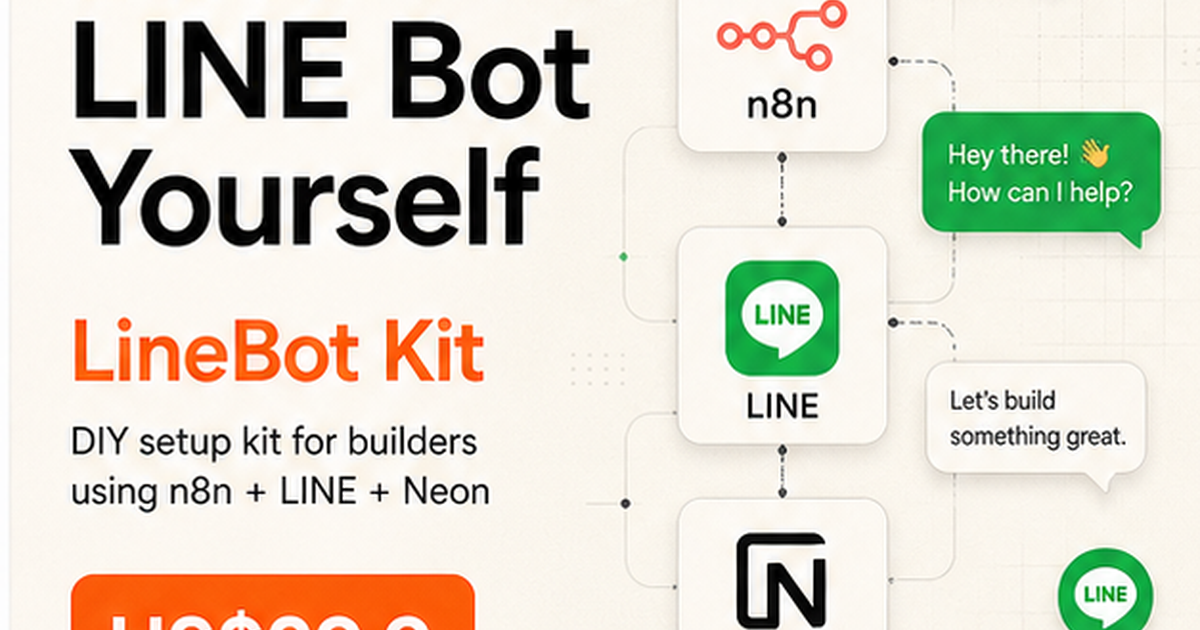
 Build a professional LINE official account with zero code — import one-click templates and let AI boost your marketing!
Why Is “One-Click Deployment” Rewriting the Entry Rules for Enterprise Software?
The answer is straightforward: it lowers the technical barrier from a “capability issue” to a “willingness issue,” allowing resource-limited small and medium enterprises to immediately participate in the AI-driven automation race. In the past, deploying an internal system that integrates multiple APIs and AI models meant requiring cloud architecture knowledge, containerization technology, and ongoing maintenance investment. Through its partnership with Hostinger, OpenClaw simplifies this process to a single click. The industrial significance behind this is that the role of cloud service providers (like Hostinger) is evolving from “infrastructure providers” to “solution distribution platforms.” If this model becomes mainstream, it will significantly accelerate the penetration of enterprise-level AI applications while potentially fostering more diverse innovation at the application layer, as developers can focus more on functionality itself rather than deployment challenges.
More crucially, its strategy of “pre-loaded AI models” is key. With built-in ChatGPT and Claude, enterprises instantly possess natural language processing and complex reasoning capabilities upon deployment. This eliminates the friction of selecting among numerous AI model providers, applying for API keys, and managing quotas. According to a 2025 developer survey, over 60% of respondents cited “account management and cost control” as a major pain point when integrating external AI APIs. OpenClaw’s bundled package is a direct response to this pain point.
The table below compares the key differences between traditional self-built analytics platforms and integrated solutions like OpenClaw:
| Comparison Dimension | Traditional Self-Built Solution | OpenClaw Integrated Solution |
|---|---|---|
| Initial Deployment Time | Days to weeks | Minutes |
| Required Technical Background | Medium to high (requires DevOps knowledge) | Low to none (interface-oriented) |
| AI Model Integration | Requires self-connection, testing, and management of multiple APIs | Pre-integrated, ready to use out-of-the-box |
| Initial Capital Investment | High (server, licensing, labor costs) | Low (pay-as-you-go subscription model) |
| Ongoing Maintenance Burden | High (security updates, scaling, troubleshooting) | Low (handled by the platform provider) |
| Expansion Flexibility | High (fully customizable) | Medium (limited by the platform’s existing architecture and connectors) |
The impact of this shift is profound. It lowers the innovation threshold, enabling more rapid experimentation with business insights. For example, an e-commerce business can easily test a workflow like “having AI analyze yesterday’s Stripe refund orders, compare them with user behavior paths in GA4, and automatically generate a hypothesis report on issues” without investing substantial development resources.
When GA4 Meets Stripe: The End of Data Silos, or the Beginning of More Complex Dependencies?
OpenClaw integrates the data flows of Google Analytics 4 (GA4) and Stripe, claiming to provide a “unified view of business performance.” This indeed hits the core dilemma of modern marketing and operations teams: user behavior on websites (GA4) and final payment conversions (Stripe) often reside in different systems, leading to difficult attribution analysis and delayed decision-making. A unified view can directly answer key questions like “Which content channel brings users with the highest customer lifetime value?”
However, we must cautiously examine the deeper implications of this “all-in-one integration.” First, it intensifies enterprises’ dependence on a few core data platforms (Google, Stripe). The more refined your automation processes become, the higher the migration cost away from these platforms. Second, GA4 itself is rapidly evolving; adjustments in its data collection and calculation logic may directly affect the accuracy of all downstream automated reports. This is not a flaw of OpenClaw but a systemic risk that all automation tools built on third-party APIs must collectively face.
From an industrial competition perspective, this integration is blurring the boundaries between tools. Traditionally, GA4 is a tool for marketing teams, and Stripe is a tool for finance and operations teams. Platforms like OpenClaw play the role of “horizontal integrators,” creating value not by replacing either side but by connecting the pathways between them. This forces giants like Google and Stripe to consider: should they further open their ecosystems to encourage more integrators like OpenClaw to increase platform stickiness, or should they extend downstream themselves to launch similar automated insight features? Currently, giants seem to prefer the former, consolidating their moats through powerful API ecosystems.
Let’s use a mind map to outline the core analysis scenarios enabled by OpenClaw’s integration of GA4 and Stripe:
mindmap
  root(OpenClaw Integration Analysis Core Scenarios)
    (Revenue Attribution Analysis)
      Track user sources from GA4 events<br>(ads, social, organic search)
      Connect Stripe payment events<br>Calculate actual revenue per source
      Generate channel ROI reports
    (Customer Behavior and Value Correlation)
      Identify GA4 behavior patterns of high-value customers<br>before conversion (page views, interactions)
      Build predictive models<br>Find similar potential customers
      Automatically tag high-potential lists
    (Anomaly Detection and Alerts)
      Monitor Stripe refund rates, average order value anomalies
      Cross-reference GA4 traffic quality changes
      Automatically trigger Telegram alerts to operations teams
    (Automated Marketing Re-engagement)
      Target long-inactive customers in Stripe
      Query their recent GA4 interaction status
      Send personalized remarketing messages<br>via WhatsApp automatically
Communication Software Integration: The Final Mile of Automation, or the Beginning of Privacy Controversies?
Integrating Telegram and WhatsApp to create chatbots for real-time notifications and interaction is promoted as “enhancing communication channels.” From an efficiency perspective, this is undoubtedly powerful: sales targets met, website anomalies, high-value customers online—these messages can be instantly pushed to team groups or responsible individuals, shifting decision-making from “periodic dashboard reviews” to “event-driven.”
But there is a potential industrial turning point here: the boundaries between internal enterprise communication and collaboration tools (like Slack, Microsoft Teams) and external customer communication tools (like WhatsApp, LINE) are being blurred by such automation platforms. OpenClaw allows the same platform to handle internal operational alerts and drive external customer service bots. This may prompt vendors like Slack to strengthen their built-in automation workflow features or more actively integrate with external business systems to defend against market erosion.
On the other hand, transmitting business data (especially sensitive revenue data) through third-party chat software raises security and compliance concerns. While OpenClaw emphasizes its security, each link in the data transmission chain—from the OpenClaw cloud to Telegram/WhatsApp servers, to employees’ personal phones—increases potential exposure risk. The EU’s GDPR and Taiwan’s Personal Data Protection Act have strict regulations for such data transmission and processing. While embracing convenience, enterprises must carefully review their data compliance frameworks.
The table below analyzes the pros and cons of different communication channels for business automation notifications:
| Communication Channel | Real-Time Capability | Integration Difficulty | Security and Compliance | Suitable Scenarios |
|---|---|---|---|---|
| Internal Collaboration Tools (Slack/MS Teams) | High | Low to medium (typically offer rich APIs) | High (data stays in enterprise-controlled environments) | Team internal operational alerts, collaboration notifications |
| External Instant Messaging (WhatsApp/Telegram) | Very high | Medium (requires commercial APIs) | Medium to low (depends on third-party platform security) | Emergency system alerts, customer service triggers |
| Low | Low | High (has mature encryption standards) | Daily/weekly summary reports, non-urgent notifications | |
| SMS | High | Medium | Medium (carrier-level encryption) | Highest priority alerts, two-factor authentication |
Future developments may trend toward “contextual routing”: high-sensitivity financial anomaly notifications go through internal collaboration tools or encrypted emails; system failure alerts requiring immediate action go through SMS or internal tools; and customer order status updates can be sent via WhatsApp. The value of OpenClaw lies in enabling enterprises to manage these routing logics from a single backend.
Customizable Dashboards: The End of Visualization, or the Beginning of AI Narrativization?
Providing customizable dashboards to visualize key metrics doesn’t sound new. Tableau, Power BI, and even Google Data Studio are already mainstream in the market. OpenClaw’s differentiation is that its dashboards are not the endpoint of the data journey but the starting point. These visualized data can be directly read, analyzed, and used to generate textual insights or even trigger subsequent actions by its built-in AI models.
This represents an evolution from “data visualization” to “data narrativization.” Traditional dashboards require managers to interpret stories themselves, deciphering meaning from the fluctuations of line charts. AI-integrated dashboards can proactively provide narratives: “This month’s revenue grew by 15%, primarily driven by the ‘social media’ channel, where customer acquisition costs decreased by 10%. Recommend increasing budget allocation for this channel.” This automated progression from “What” to “So What” to “Now What” is the core competitiveness of next-generation business intelligence tools.
According to Gartner’s prediction, by 2027, over 40% of enterprises will use “narrative” analysis reports automatically generated by AI to replace traditional dashboards. OpenClaw is at the forefront of this trend. Its challenge lies in whether its AI-generated insights are accurate and reliable enough to earn decision-makers’ trust. This concerns not only model capability but also whether the platform allows enterprises to inject their domain knowledge (e.g., “End-of-quarter promotions in the North American market typically cause a temporary rise in refund rates”) into the analysis logic, making AI “narratives” more aligned with business reality.
timeline
    title Evolution of Business Intelligence Tools
    section Static Report Era
        2000s : Dominated by Excel and PDF<br>Heavily reliant on manual compilation
    section Visualization Dashboard Era
        2010s : Rise of Tableau, Power BI<br>Interactive charts become standard
    section Embedded Analytics Era
        Early 2020s : Analytics features embedded in SaaS products<br>Data becomes more real-time but more fragmented
    section AI Narrativization Era
        Late 2020s : AI automatically interprets charts<br>Provides insights and recommendations
    section Autonomous Action Era (Future)
        2030s+ : Systems execute optimization actions<br>based on insights automatically
Who Are the Winners, and Who Should Feel Anxious?
The trend of “integrated automation platforms” represented by OpenClaw is reshaping the value chain of the enterprise software market.
Clear winners include:
- Small and medium enterprises and startups: They can acquire automated data capabilities previously affordable only to large enterprises at extremely low initial costs, accelerating trial-and-error and growth cycles.
- Cloud hosting service providers (like Hostinger): Through such partnerships, they enhance the added value and customer stickiness of their infrastructure services, upgrading from merely “renting servers” to “providing solution gateways.”
- Ecosystem integrators: Players like OpenClaw that successfully integrate multiple key platforms (Google, Stripe, Meta/WhatsApp) have the opportunity to become new hubs in enterprise operational workflows.
Those who should feel anxious are:
- Point solution providers: SaaS tools with single functionalities and lacking deep integration with mainstream ecosystems will see their value diluted by such “all-in-one” platforms. They must prove they have irreplaceable depth in specific domains or极致 user experience.
- Traditional system integrators (SIs): If “one-click deployment” and “default integrations” become the norm, project demands for custom-built data pipelines and reporting systems from scratch will decrease. SIs need to transform, shifting more toward roles as “strategy consultants” and “complex workflow designers.”
- Internal IT departments (if their role is limited to maintenance): When business departments can independently address substantial data automation needs through such low-code/no-code platforms, IT departments risk diminished influence if they cannot transform into strategic partners providing architecture governance, security reviews, and innovation collaboration.
Overall, OpenClaw is not just the launch of a new tool; it is a strong market signal: the next decade of enterprise software will be one where “integration” and “automation” deeply combine. AI is no longer a flashy showcase but becomes the silent engine connecting data and triggering actions. For Taiwanese business owners and tech professionals, now is a critical moment to re-examine their own data flows and workflows, consider how to embrace this wave of automation, and push operational efficiency and decision-making intelligence to new heights.